



 When you see cracks in a concrete slab or wall, the first guess is usually that something went wrong. However, this is not always the case. Actually, concrete cracks are very common, a few are even inevitable. Pointing out the exact cause of a particular crack is often difficult.
In this blog, we hope to help you better understand cracking in concrete. Prepare you for potential issues by shedding some light on how to handle the issues of cracking concrete when they do happen.
Consult Us
Thought leaders in innovative and agile construction and projects
Shrinkage Cracking
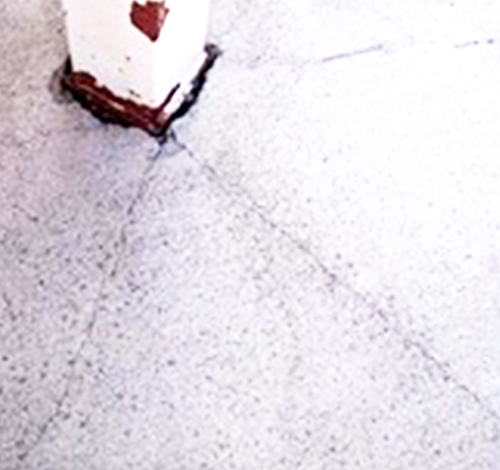
Basically, there are three types of everyday cracking. The first and most common, is shrinkage cracking. When concrete is still in its plastic form or state (before hardening), it is full of water. When that water evaporates and eventually leaves the slab, it leaves behind large voids between the solid particles. These empty spaces make the concrete weaker and more prone to cracking. This type of cracking happens often and is referred to as “plastic shrinkage cracking”.
While plastic shrinkage cracks can happen anywhere in a slab or wall, they almost always happen at corners that point into the slab or with circular objects in the middle of a slab (pipes, plumbing fixtures, drains, and manholes). Plastic shrinkage cracks are usually very narrow in width and barely visible. Although almost invisible, it is important to remember that plastic shrinkage cracks are not only present on the surface, but extend throughout the thickness of the slab.
Wet mix a contributing factor to Cracks
A very wet mix is a contributing factor to shrinkage in concrete. While water is an essential ingredient in every concrete mix, there is such a thing as too much water. When the mix has too much water, the slab will shrink more than if the correct amount of water was used. Hot weather is another main reason for plastic shrinkage cracks.
One way to deal with cracks in concrete is to use control joints. Control joints are designed cuts that go at least halfway through the thickness of the concrete slab. The intent with these is to cause weakness so that the concrete cracks along the bottom of the control joint which releases the stress from the evaporating moisture. These joints are typically spaced evenly.

Structural Cracking

Craze Cracking
This is the third most common type of cracking, and the one that seems to frustrate contractors the most, is called “craze cracking.” Crazing cracks are very fine, surface cracks that resemble spider webs or shattered glass. When the top of a concrete slab loses moisture too quickly (dries up quickly), crazing cracks will likely appear. It is the concrete’s surface drying faster than the inside of the slab causing this. This normally happens when dry, hot or windy conditions occur while a slab is being placed.
This type of crack is purely aesthetic in the sense that it doesn’t really look pleasing to the eye. It only affects the surface skin of the concrete and does not cause any structural concern.
The second most common type of cracking is structural cracking. Although it may be mostly seen in new buildings, structural cracking doesn’t usually occur there. It has a tendency to be more prevalent in older structures. The pressure of a building is controlled by the weight of the structure and the wind. Structures stabilize over time, and external influences such as pipe ruptures or hurricanes build up pressure at specific points throughout the structure. Usually, one of the first places to where these stresses are relieved is in the concrete. The very thing that makes concrete valuable, which is its strength, is now seen as its greatest weakness. Concrete cannot flex, so it must crack. These cracks show up in a variety of widths and directions.
There are various ways to repair these cracks. Recommendations for repairing them will be based on the facility’s usage. If a crack is about half a centimetre wide and in an industrial environment where heavy forklifts or vehicle traffic will be going over the crack, one can consider chasing the crack with a wider blade and filling the crack with a high-strength repair material. This keeps the smaller cracks along the edge of the larger crack from spreading.

Partner with Us on your Projects
Our mission at GloQ Construction & Projects is to be a thought leader, innovative and agile construction and projects company. With that in mind, we aim to bring you informative pieces of information that may even act as reminders of knowledge you have somehow forgotten over time.
Together, building for future generations!


