


A Groundbreaking Innovation in Construction Materials.
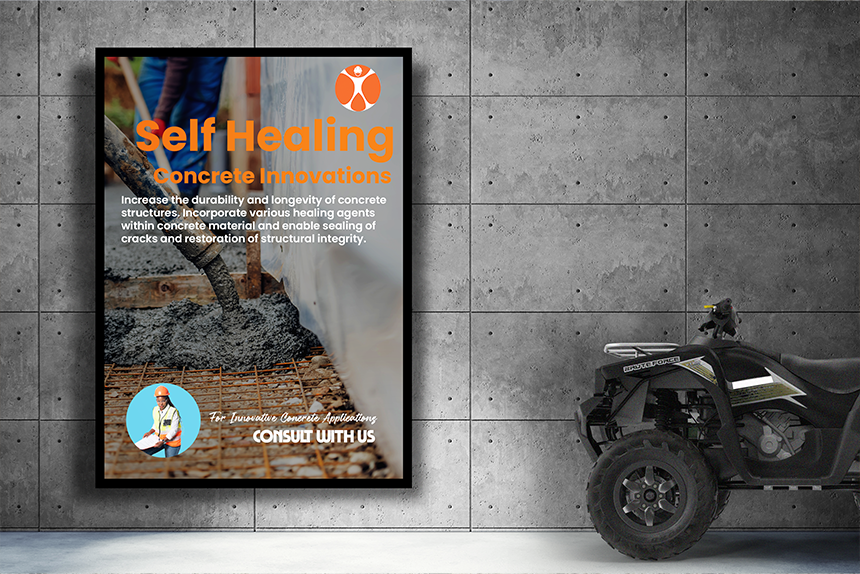
Self-healing concrete is a groundbreaking innovation in the field of construction materials. It is a type of concrete that has the ability to repair its own cracks and damage without the need for human intervention. This technology has the potential to revolutionise the durability and longevity of concrete structures. The self-healing ability of this concrete is achieved through the incorporation of various healing agents within the material. These agents can be in the form of capsules or fibers, which are embedded within the concrete mixture during the manufacturing process. When cracks occur in the concrete, these healing agents are activated and released, filling the cracks and restoring the structural integrity of the material.
One common method used in self-healing concrete is the inclusion of bacteria or microorganisms that produce calcium carbonate. When cracks form, moisture enters the concrete and activates these bacteria, triggering a chemical reaction that results in the formation of calcium carbonate. This mineral acts as a binder, filling the cracks and sealing them off, effectively repairing the damaged area. Another approach involves the use of encapsulated healing agents, such as polymers or resins. These capsules are designed to rupture upon crack formation, releasing the healing agent into the damaged area. The agent then reacts with the surrounding environment, forming a solid material that fills the cracks and restores the concrete’s strength.
Impact and Significance of Self Healing Concrete
The development of self-healing concrete has significant implications for the construction industry. It has the potential to increase the lifespan of concrete structures, reduce maintenance costs, and enhance sustainability by minimizing the need for repairs or replacements. Additionally, it can improve the safety and durability of infrastructure, as cracks and damage can be repaired promptly, preventing further deterioration.
While self-healing concrete is still a relatively new technology, ongoing research and development continue to refine and improve its effectiveness. As this innovation progresses, we can anticipate a future where concrete structures are more resilient, longer-lasting, and better equipped to withstand the challenges of time and environmental factors.


