




The concrete industry must play a more intentional role of educating contractors, engineers, Site management, and quality control personnel of the significance of excellent curing practices of concrete on site.
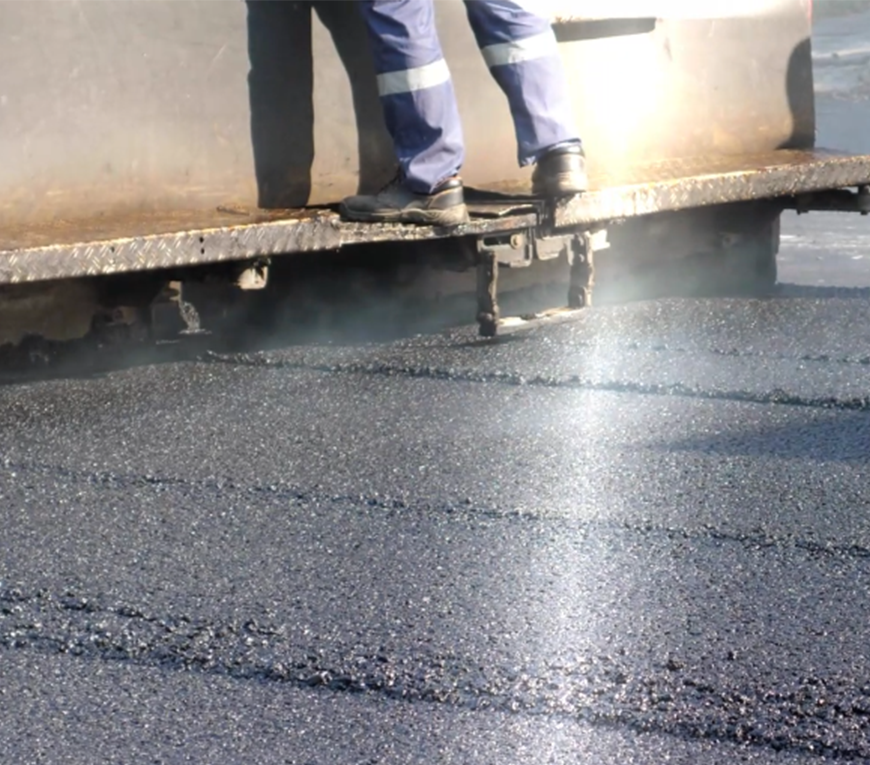
Curing requirements are normally incorporated into the contract specifications, however, they’re not often adhered to on site. Just like batching and mixing operations for concrete, curing has to be closely monitored and controlled. As a construction project progresses on a site, it becomes very difficult to prove whether proper curing practices have been applied or not.
Proper curing involves maintaining appropriate moisture content in the fresh concrete. This may be achieved by use of different curing methods, or a combination of methods. All the methods, however, involve two basic concepts. Either the surface of the concrete is kept moist by incorporating an external supply of water (water curing), or the loss of moisture is controlled by the using impervious coatings, membranes, coverings, or by the concrete formwork.
Guide to on-site Curing Methods
| Type of Construction | Curing Material | Application |
| Road and airfield pavements | Pigmented resin-based curing compound with high efficiency rating | Immediately after finishing process is complete. (Concrete ay have to be protected from rapid drying out before it sets to prevent plastic-shrinkage cracking and excessive heat build-up) |
| Floor slabs | Curing compound or polythene or other impervious sheeting material | Same as above |
| Concrete columns, beams, walls, etc. in hot dry conditions | Resin-based curing compound | Immediately after finishing process is complete |
| Polythene or other impervious sheeting | Apply in close contact with surface immediately formwork is removed | |
| Formwork itself | Leave undisturbed for atleast seven days and longer in cold weather | |
| Formed, permanently exposed concrete sections cast in cold weather | Insulation | As soon as concrete is placed, and maintain for at least seven days |
| Delayed removal of formwork |
Table Extract: Guide to on-site concrete curing (Fulton’s Concrete Technology, Ninth Edition, 2009)
Key Tip:
NB. Curing methods that will be adopted should be clearly defined in the specification document and provision for payment made in the bill of quantities, ideally as a fixed extra-over rate per square metre.


